Contents author Cimino work-in-progress published 20260215
I know we’ve come a long way
We’re changing day to day
But tell me, where do the children play?
Cat Stevens, 1970
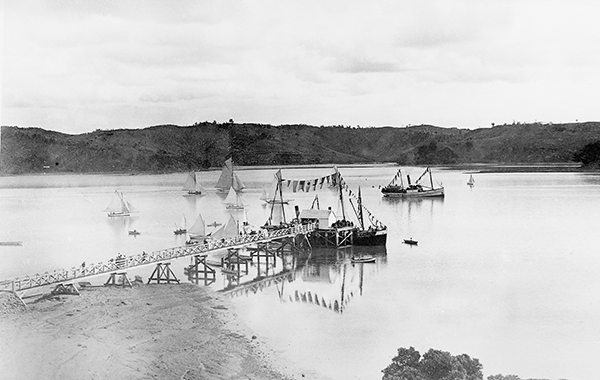
First-Known Study of Mahurangi Regatta Master Class: Henry Winkelmann, when recording the Mahurangi Regatta in 1901 introduced Auckland “yachtmen” to what then was almost exclusively a local Mahurangi, post-Christmas gathering of contemporary working craft.
photographer Henry Winkelmann
Mahurangi Regatta, Cimino was incredulous to be told, had eaten its big sister’s lunch. For starters, he recalled, when he and others revived it in 1977, it was held weeks ahead of the world-famous Auckland Anniversary Regatta. It was only in belated response to an Auckland club moving its Friday-night-race-to-Mahurangi to Auckland Anniversary weekend that Mahurangi saw the synergies in moving their little-sister regatta to the Saturday morning.
As for impacting the Auckland Anniversary Regatta, Cimino believed, was an all-too-frequent case of confusing correlation with causation. What had changed was Auckland yachting. Yachts had become larger and ranged further, thanks to being given more-generous auxiliary engines. Auckland yachtsmen now expected to range well into the Hauraki Gulf given an encouraging weather forecast or a three-day weekend, or both. Then, rather than dutifully return to the Waitematā Harbour on the eve of the Auckland Anniversary Regatta, Sunday would be enjoyed as a lay day, in the yacht’s favourite haunt be it Mahurangi, Bon Accord, Te Kōumejust one of thousands of New Zealand placenames mispronounced due to the failure to observe the macron. Practice koh–u-meh, only then add the unhelpful “the”, teh–koh–u-meh. Pronounce Kō as the cou in cough, and the u as ooh, as pronounced in Aotearoa and Australia harbour, or some other idyll. From there, in its own sweet time, the vessel would grace the great day with its informal presence in the mid or late afternoon—after most, if not all, the racing was done.
During the first century or three that sea-level rise substantively plays out, there will be both the need and the time, for playtime aplenty. All work and no play in the 23rd century is set to be bigger than the killer it is today and clearly was in the 15th when the Jack-a-dull-boy proverb first appears. Preventing debilitating levels of burn-out during the 300-year war will be essential if it is to succeed in salvaging a survivable climate. Equally imperative, given the beyond-urgent imperative of the Great Mobilisation, is exploiting every opportunity to put play to work in building the broadest possible coalitions of mobilisers. A potential coalition exemplar pivots on the Auckland Anniversary weekend regattas. Rather than lament explorations unpursued to date, Cimino choses to reimagine his efforts to ignite an evolution of the once magnificent Auckland Anniversary Regatta in a counterfactual account, drawing initially on the factual.
Stung into action by the discovery that a frustrated Auckland Anniversary Regatta committee squarely placed the blame for diminishing participation on the popularity of the Mahurangi event, Cimino initiated a midyear “officers and commodores” luncheon, hosted by the Royal New Zealand Yacht Squadron. While the first two gatherings were well attended, most of the focus was on frustrations with then current Auckland Anniversary Regatta format. These ranged from the “washing machine” agitation of the harbour’s sea state to the collapse of interest in traditional youth dinghy sailing programmes. Not that harbour congestion and an agitated sea state aren’t important challenges. Rammed and sunk by… To be continued…
Disclosure The author of this novel modello is no longer the secretary of Mahurangi Action Incorporated or the Mahurangi Coastal Path Trust. The content published here, however,is that of the editorially independent, independently funded Mahurangi Magazine.